
hello world!

As the Royal Scholar of Wonderland, I, Bibwit Harte am tasked with peering through the Pool of Tears to see the myriad of creations inspired by Wonderland, from Lewis Carroll's fanciful novels, Alice's Adventures in Wonderland and Through the Looking Glass first published in 1865, to the 1951 animated movie Alice in Wonderland from Disney to the very accurate 2006 New York Times best-selling series The Looking Glass Wars with Princess Alyss by Frank Beddor. Today I am investigating the exquisite art form of dance!
Specifically, dance inspired by Wonderlandian themes. Dear readers, it is only natural that you might think of me as a creature of the mind, an intellectual being who sits hour upon hour poring over dusty tomes, so it may surprise you to learn that I am a rather gifted dancer. Perhaps I owe this talent to my Leporidaen genetics. (Sure and nimble of foot, you know.) I can waltz, foxtrot and even (forgive me) do the Roger Rabbit with some degree of style and grace. As a disciple of the dance, I am always fascinated by the many ways that flesh can express itself, especially while running from the Scarlet Guard in an action packed leap from the clutches of the Red Queen. Today we will examine three inspired and inspiring examples.
The first piece we will discuss is ALiCE. (Note the interesting capitalization choice. Only the “i” is small! Clearly an existential statement to ponder…) ALiCE tells the story of a woman, or perhaps a child, unsure of her identity and where she is going, escaping or exploring as she discovers the powers within her changing body. The world around her is different, curious, and compelling - and at times absolutely bonkers. Alice provides a sensory feast of arresting images, powerful performers and striking kinetic scenery.
Exploring the themes of time, identity, rules and authority, award-winning Jasmin Vardimon's creation follows the worldwide success of her adaptation of Carlo Collodi's Pinocchio (another story for another time Dear Readers…) which, for the past six years, has played to packed houses across the world. Because I feel that dance must be seen in motion, and I have recently been introduced to the concept of the “video,” I am including a video link for your delight and edification…

Thrilling, yes? I think they do an especially excellent job capturing the movement of the famous Wonderlandian Caterpillar.
There is much to admire in the Kansas City Ballet production of Alice (In Wonderland.) The gleaming silver-and-sky-blue of the opening lends a tender airiness to the “real-life” scenes, in which we see Alice Liddell, her family, and camera-wielding Lewis Carroll all of whom are about to be transformed into magical creatures. The White Rabbit prances about virtuosically, with terse, tensile movements with heel-to-derrière hops. (As rabbits do…)
As Act I progresses, Carroll becomes the Mad Hatter (which seems utterly unlikely), Alice’s mother and father become the Queen and King of Hearts, Alice’s twin sisters become Tweedle Dee and Tweedle Dum. Perhaps I am prejudiced, but I am most impressed by the dancing of the White Rabbit. You may judge for yourself by viewing here…
Next we shall examine another ALICE entitled dance piece. This time by the dance group Momix. This quirky dance piece looks at height and movement. Alice’s body grows and shrinks and grows again, the dancers extend themselves by means of props, ropes, and other dancers. I find it all very fascinating, but the reviewer in the New York Times did not enjoy it. What is the “New York Times” you may ask? It is a daily published collection of news, reviews and opinions, very similar the Wonderland’s own “The Looking Glass Observer.” Dear readers you may judge for yourself by watching this …
I will make one observation about a moment in the footage I found rather disturbing… Rabbits are not for riding! (shudder)
The last Alice/Alyss inspired dance piece we will discuss today is Christopher Wheeldon’s lively Alice’s Adventures in Wonderland. This inspired ballet transports audiences to the riotous world of Wonderland, including a tap-dancing Mad Hatter and a comically wicked Queen of Hearts. Bob Crowley’s ingenious mixture of traditional and innovative stagecraft together with the pace and colour of Joby Talbot’s score make Alice a gloriously vibrant experience. Packed with clever choreography – from the memorable croquet scene, complete with flamingos and hedgehogs, to a parody of the Rose Adage from The Sleeping Beauty – this is enchanting family entertainment at its best. A very brief snippet can be found here…
And here you can see the entire dance inspired by her Royal Viciousness, Queen Redd! I am quite certain Redd would be thrilled to see her self depicted in such a glamorous manner!
I don’t know about you Dear Readers, but I find myself most inspired to “shake a leg” or “cut a rug” or “trip the light fantastic” as the sayings go! Though I have issues with the man, I am going to end with a quote by Lewis Carroll… “Will you, won’t you, will you, won’t you, will you join the dance?” Until next time, Dear Readers!
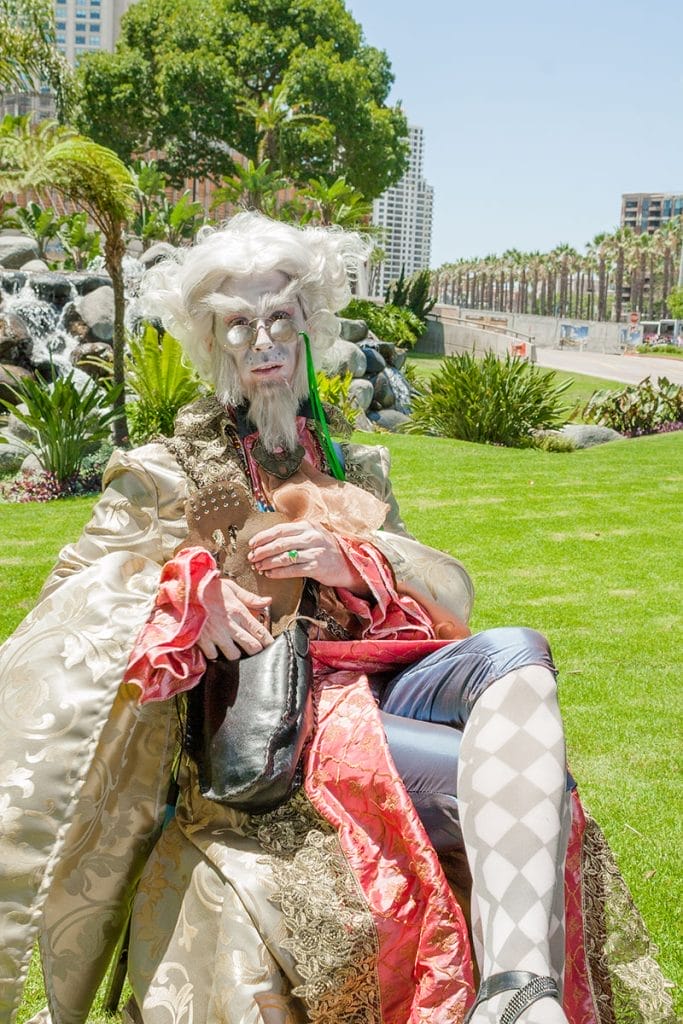
Royal tutor to the Heart family. An albino with bluish-green veins pulsing visibly beneath his skin and ears a bit large for his head—ears so sensitive that he can hear someone whispering from three streets away, which he does by cocking his head, as might a dog hearing a high-pitched noise. A loving and patient fellow, though long winded at times as he expounds on the incalculable knowledge he has amassed in his long life. Bibwit tutored both Queen Genevieve, Alyss’s mother, and Redd in the glories and dangers of imagination. He would have tutored Princess Alyss had she not been exiled on Earth after Redd’s coup, and he becomes an important advisor to her when she returns to Wonderland to navigate her Looking Glass Maze and topple Redd. He’s the inspiration for the white rabbit in Lewis Carroll’s Adventures, “white rabbit” being an anagram of his name.