
All Things Alice: Interview with Matt Wilson
As an amateur scholar and die-hard enthusiast of everything to do with Alice in Wonderland, I have launched a podcast that takes on Alice’s everlasting influence on pop culture. As an author who draws on Lewis Carroll’s iconic masterpiece for my Looking Glass Wars universe, I’m well acquainted with the process of dipping into Wonderland for inspiration.
The journey has brought me into contact with a fantastic community of artists and creators from all walks of life—and this podcast will be the platform where we come together to answer the fascinating question: “What is it about Alice?”
For this episode, it was my great pleasure to have Matt Wilson, co-founder and chief creative officer of Privateer Press and the creator of Warmachine and Monsterpocalypse, join me as my guest! Read on to explore our conversation, and check out the whole series on your favorite podcasting platform to listen to the full interview.
Frank Beddor
Welcome to the All Things Alice podcast, everybody. I have Matt Wilson on, who is one of the illustrators who worked on The Looking Glass Wars many, many years ago. He has a company called Privateer Press. He’s known for the Iron Kingdoms, Warmachine, and Hordes. Do I have that right?
Matt Wilson
Yeah. The Iron Kingdoms is a setting. Warmachine was our first tabletop miniatures game set in the Iron Kingdoms, and Hordes was the follow-up to that.
Frank Beddor
In your background, you have many of the miniatures and characters from your world. I think we share that: building something from scratch, being entrepreneurial, trying to have ownership, and spending a great deal of time, probably too much time, in one universe. So welcome to the show. I’m excited to reconnect with you and hear what’s been happening. Since this is an Alice in Wonderland–themed show, I like to ask guests what their first introduction was to Alice in Wonderland.
Matt Wilson
I’m going to say it was probably the Disney animated movie, like I imagine it was for a lot of people. That was pretty early on. Then, right after high school, I actually discovered the book. It was one of the few books I’ve read multiple times in my life, because I enjoyed it so much.
Frank Beddor
What did you connect to? And is there anything from that book that you found in your work on Warmachine or Hordes, thematically or in any illustrations? Is there any connective tissue?
Matt Wilson
I wouldn’t say directly. I definitely found it inspiring as an artist and a writer. The Disney version isn’t very representative of the original work, in terms of how out there and bizarre and creative it is. That’s what really hit me: it took my mind to a different place when I read that book. In my own work, I’ve always strived to do something different and new, and in the world-building, to try to create that same sort of cohesion that Wonderland has.
Frank Beddor
Can we talk about world creation a little bit? You’ve been working in your world for a very, very long time. Can you take our audience through a little bit of the origin story, what inspired you, and how you started to build your world out? I think people are always interested in the minutiae of how it starts and how you keep feeding it.
Matt Wilson
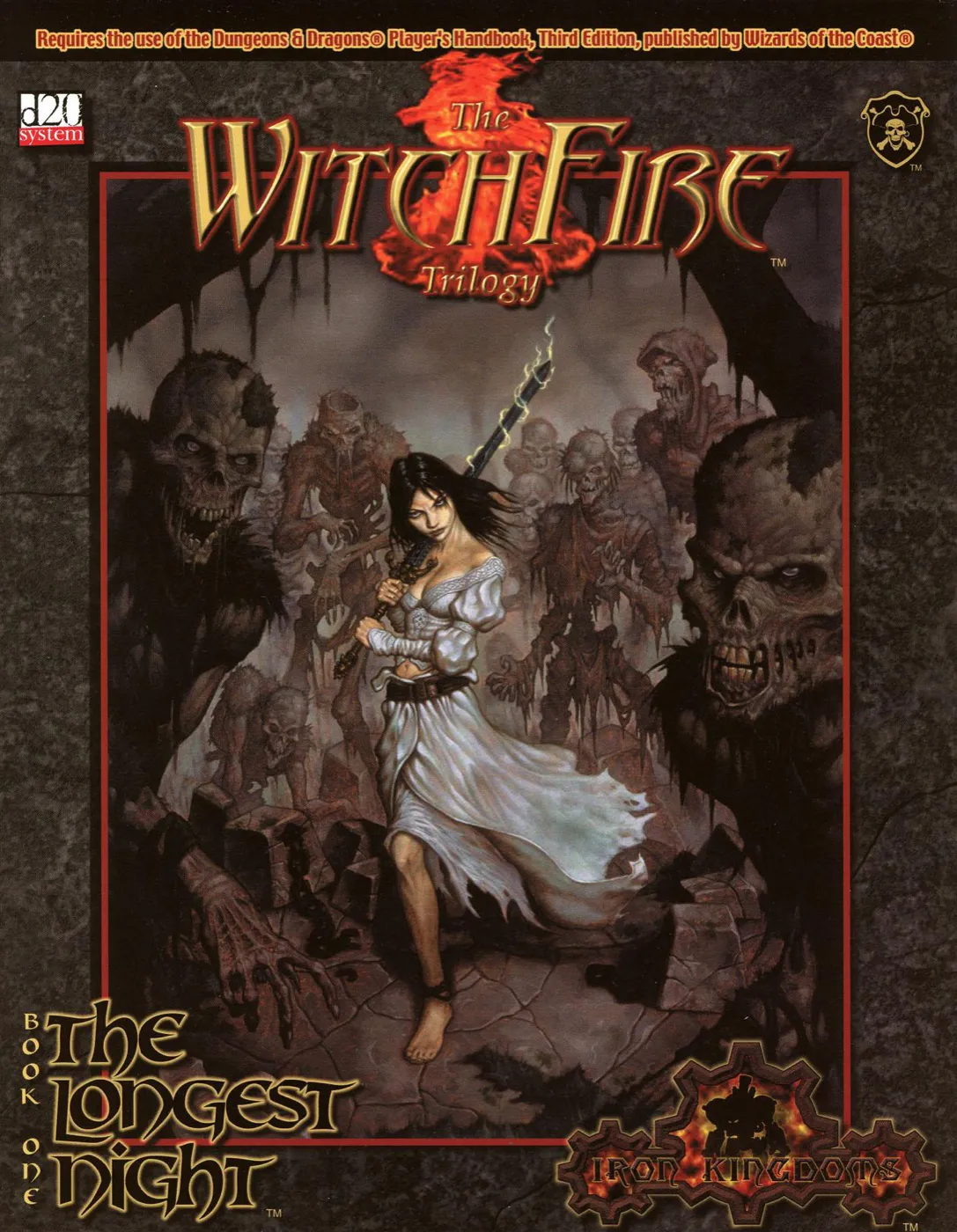
For me, it was unconventional. I did not set out to create a world or a company or any of the things I’ve done for the last 25 years. At the time, third edition Dungeons & Dragons had come out, and Wizards of the Coast had put out what they called an open game license, which allowed third-party publishers to create products compatible with the Dungeons & Dragons line. It was a pretty neat opportunity, and a lot of different companies were springing up. I was actually working at Wizards of the Coast at the time, and I knew a couple of other people who were doing these side projects. It sounded fun. I was always interested in doing my own thing, even while I was illustrating other companies’ worlds.
So a couple of friends and I decided to do a Dungeons & Dragons adventure on a lark. There were two artists and a writer, and we just started making up a story and drawing the pictures around it. As we got deeper into it, it all started to gel. For me, it’s more of a compulsion. When I start to create something like that, I have to fill in all the blanks. That’s what I found myself doing with this place that would come to be called the Iron Kingdoms. You answer the question of how magic works in this setting. Who are the people who use it? What does that mean for society? What does that mean for industry? As we chased those different threads, the world came together.
By the time we had finished those three short adventure books, we had created a world, and yet it was only the tip of the iceberg. It was maybe 150 or 180 pages of adventure and background. The books did well, so we would take the proceeds from one and invest them in the next one, and the projects kept growing in scope and size. After the three adventure books, we decided to do a monster book, a 300-page tome of monsters. We really did it all backwards. Usually, when you set out to make a setting for a game, you start with the world book or a story. Instead, we created an adventure, which is a story for other people to experience, then figured out all the features that were in it. We got to the actual world book a couple of years into the whole thing, and that ended up spanning another 800 pages. At this point, there are tens of thousands of pages of lore, background, stories, and adventures, over almost 25 years.
Frank Beddor
It’s literally like listening to myself: the threads, and “Now I have to answer this question,” and that opens up another question. “Oh, this character. I wonder what the backstory is.” It’s the same impulse: I need to finish it. But when you did the world book, that whole bible, how much material did you need before you put out the first product from Privateer Press?
Matt Wilson
We started on the role-playing game side. We did the three adventure books, then the monster book, then a player’s handbook and a world guide, which built out the role-playing experience. There had been lots of role-playing games before us, and Dungeons & Dragons had been around for a long time, so there was a template you could follow: players need these things detailed for them, the game master needs more, and we need to know about the cities in the setting. But in those early days, it was a very organic process without any real methodology. We wrote and made pictures, and we had ideas along the way. I’m sure at some point we had an outline that said, “These are the buckets we’re going to fill to create this book,” and along the way we’d figure out more stuff we wanted.
We were probably in the middle of the Monsternomicon, our monster book, when we started to build a community around the setting. This was a long time ago, before social media, so we had a bulletin board where people could post, and we were interacting with players and getting a sense of what they wanted more of.
At the same time, I had always been a miniatures enthusiast. I did two tours at Wizards of the Coast: once as the art director for the card game Magic: The Gathering, and then a couple of years later I went back when they were starting to do miniatures games. That was a short-lived stint before I ended up in the illustration studio as the lead concept artist for Magic for a few years. While I was there, I got to know people who were working in the sculpting studio and the manufacturing, and we thought it would be neat to make a miniature of one of the things in our setting.
One of the unique things about the Iron Kingdoms is that it’s a world that blends steam-era technology with magic. There are these things called steamjacks walking around, big giant automaton robots powered by steam. They’re the droids of the Iron Kingdoms. You couldn’t just go out and find a miniature of one of these, so we thought it would be neat to sculpt one and make it available to the players. We got about halfway through the sculpt and realized we wanted to do a lot more.
Frank Beddor
It’s fun creating.
Matt Wilson
One miniature wasn’t going to be enough. We wanted to make more toys. So at that point, I started designing the miniatures game Warmachine. We released it about three years after we’d originally embarked on the role-playing game side of things, and that really exploded for us. Suddenly, we were a miniatures game company, and we built a factory where we manufactured the miniatures for the next 20 years.
Frank Beddor
Tell me about that, because I think that’s about the time we met.
Matt Wilson
Yes, it would be right around then. I was on my way out of Wizards of the Coast to go full-time running Privateer Press and building out the miniatures facility.
Frank Beddor
That’s how I got lucky with you doing work, because you were on your way out. You were starting this company, and I don’t think it had quite blown up yet. That’s when you came on board and did those concepts for me. Then, following that, I saw you at all the Comic-Cons with your company.
The first question I want to ask, because I’m really curious about Warmachine: when it was released, how quickly did it go from being a niche thing to blowing up for you? It must have happened quickly, because you launched a whole company based on it.
Matt Wilson
I wouldn’t say it happened quickly. In fact, it’s always been a lot of work. Our big convention of the year has always been Gen Con, which is held in Indianapolis every summer. At the time, it was still being held in Milwaukee, before it moved. We took maybe half a dozen of these miniatures, and an early version of the game rules, and demoed it at a very small booth with just a couple of tables while we sold our Monsternomicon alongside it. It appealed to people who had played our role-playing game, because they got to see miniature versions of the things we had seeded the world with. But now there was a bigger conflict. The role-playing game is very focused on dungeon delving and party-driven adventures. When we got into the miniatures game, it became about the conflicts between the different nations, so the scope of everything zoomed out and got bigger.
We first showed off the game in the summer of 2002, and in March 2003 we did the official release, when we actually shipped it and had it in stores. From there, we planned monthly releases around the different factions. The game started with four warring factions, and each one had characters and soldiers and these steamjacks, or warjacks, as they’re called in the miniatures game. We kept building on those and increasing the scope: we’ve got soldiers, now we want to see them on horses and make cavalry, and then we’d make tanks and giant robots. We built out these really magnificent armies, and we added more armies.
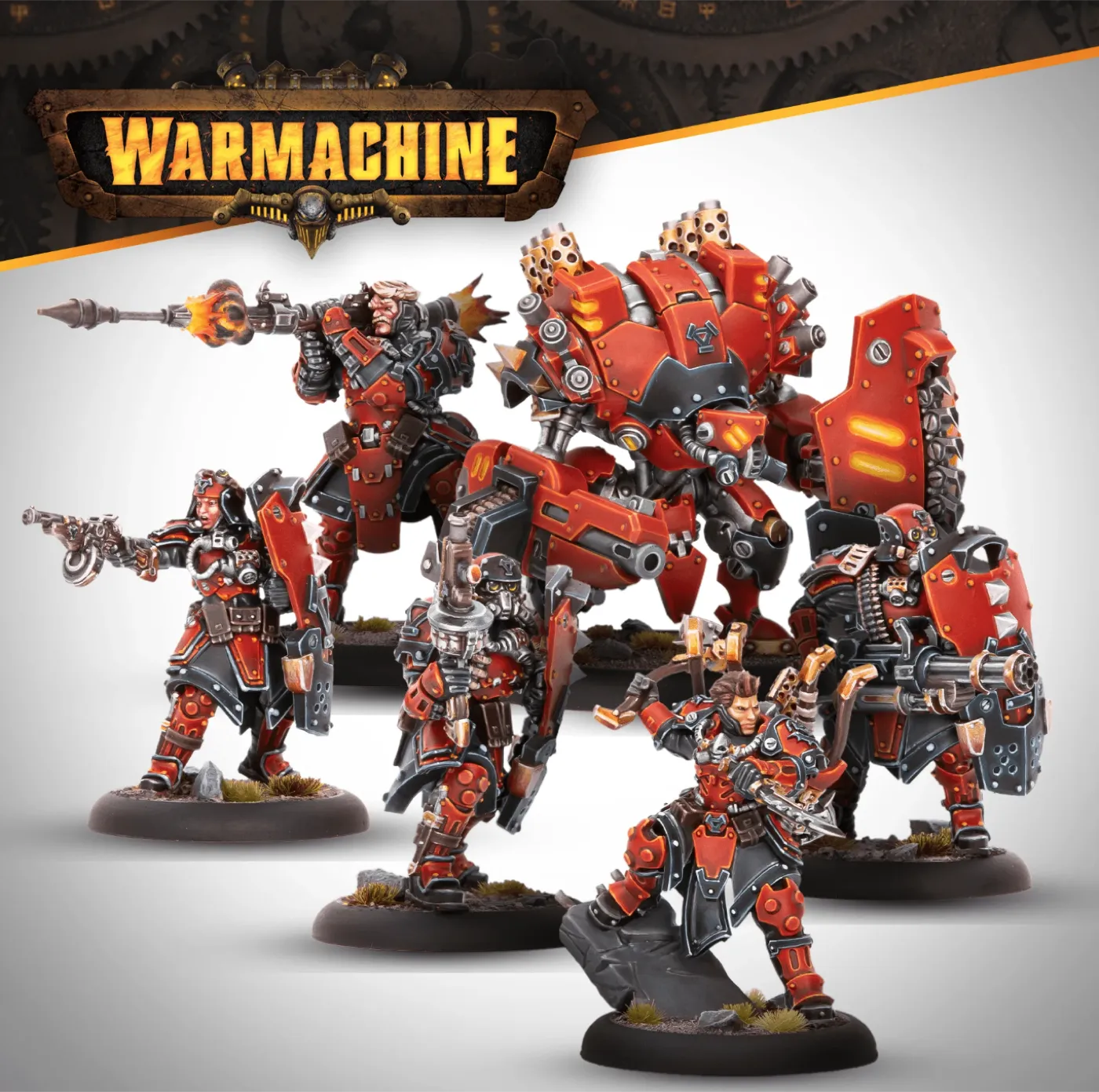
At times things moved really, really quickly. When we started, we weren’t doing the manufacturing; we contracted it out to suppliers. But the game caught on fast enough that our suppliers couldn’t keep up with how quickly we needed product back in stores. About three months in, in June that year, we said, “We have to have our own production facility to manufacture at the pace we need.”
Frank Beddor
That tells you something. There are also cash flow issues in that situation.
Matt Wilson
Big time. There are all kinds of issues. Back then, we were making everything in metal. The process is called spin casting. We would make a two-part mold out of silicone rubber, and the original master miniature is pressed into the mold. The molds go into a machine about the size of a large washing machine, and it spins them around as you ladle in molten pewter. It’s a slow, laborious process, as you can imagine. Many miniatures are in multiple pieces, so you’d have multiple molds for each of them. I have to stress, we never really had a plan.
Frank Beddor
A bunch of artists who got together and said, “Let’s do cool stuff and see where it takes us.”
Matt Wilson
It was crazy. We were young, and I didn’t have kids at the time, so it was easy to take big risks. At no point, at least in the first five or ten years, did I think, “This is what I’m going to do for the rest of my life.” And yet that is what happened, because it was always growing in some fashion, and there was always something new to do. It was never the same day twice, whether it was expanding production from one machine to two, then realizing we needed a bigger warehouse, then having twelve machines, or tackling a different type of material, or working with overseas vendors on other kinds of products.
We’re known for Warmachine in particular, but we’ve made lots of other games: card games and board games. We have another property called Monsterpocalypse, about giant kaiju smashing cities, that has been around a long time and that we’ve sold multiple times to movie studios. We’ve done novels and fiction, a little bit of comics, magazines, all kinds of things. That variety is what always kept me in it. If I had an idea, I could chase it.
Frank Beddor
My kids are off to college, and they’re worried about AI and what kind of jobs and careers they can have. For people who are creative, that’s really challenging: How do you get paid? How do you make a living? What you’ve done, through your passion, is take your own creative impulse, after having a job at Wizards of the Coast and illustrating for other folks, and play in your sandbox with your friends. You discovered there is a way to make money, a way to have ownership, a way to have a company. It’s trial and error, but it’s doable. In a time when everything is online and AI-generated, these are tangible assets that you control, that you own, and that you get the joy of playing with.
I try to talk to my kids about that. It’s finding something that takes hold of you. In a way, it’s its own love story. I’ve fallen for this thing I’m doing, and I want to keep nurturing it and bringing it to life, and hope that it goes off to college one day and has its own career past me.
I love the journey you’ve taken, but there also seems to have been a crossroads for you. I read that you sold your company.
Matt Wilson
We didn’t sell the company.
Frank Beddor
Or you partnered with someone? Can you tell me about that decision?
Matt Wilson
It was a couple of years ago, and it unfolded over multiple years before it came to fruition. We sold the Iron Kingdoms, Warmachine, and everything under that IP umbrella to a company called Steamforged Games in the UK. Along with that, we continued to work with them as the developing studio of the game, and we manufacture the miniatures for them. I think we primarily supply North America right now, because they’ve opened a couple of other facilities elsewhere, but we still do the bulk of the miniatures manufacturing.
It was the right time for us as a company, and for me, to step back from the things that consumed my day-to-day. Where I was a couple of years ago and who I was when I started the company are two completely different people. I started as a writer, an artist, and a game designer. As the company grew, I was always involved in the creative side, and my actual role is Chief Creative Officer. But in the last decade, I spent a lot more time on administrative things, production, and supply chains. When we went through the pandemic, I was very focused on the mechanical aspects of the company, not as much on the creative side as I would have liked. Making this partnership with Steamforged and letting them take ownership of the brands allowed me to step back into a creative place I’d been missing for quite a while. Now I’m much more involved on the creative side, and I’m not doing as much posting to social media or dealing with vendors.
Frank Beddor
You’re getting back to the roots of the fun. Over time, when you build an intellectual property, you have to take care of it, and a lot of that is the business side. Making sure the trademarks are taken care of for all the characters, month to month and year to year, is a full-time job. What I love about your story is the arc: where you started, where you’ve ended up, and how you’re coming back to the part of your world you love the most. Did you make the right decision, do you feel?
Matt Wilson
Oh, yeah. I think it’s gone very well, for me personally and for our company. While we’ve been very focused on continuing the development and production of Warmachine over the past couple of years, we have other things ahead of us that we’ll do just as Privateer.
In a lot of ways, it was a very liberating experience on the creative side. It allows us to indulge some of the other creative interests we’d had to put to the side, because Warmachine was a bit of a juggernaut for us. It required a lot of attention, creatively as well as in manufacturing, distribution, and marketing. If you carved the organization into a pie chart, about 10% of it was the creative aspect, and 90% was everything else that supported it. I got into it for the 10%, and I ended up having a lot more of that pie on my plate.
Frank Beddor
As opposed to in your stomach.
Matt Wilson
Again, this is what happens when you don’t have a plan. So that’s my advice to all the kids out there listening and thinking about the future: have a plan. It’s a good idea.
Frank Beddor
But ignorance is bliss on occasion.
Let me quickly go back to Wizards of the Coast, because a lot of the artists I’ve worked with have worked for Wizards of the Coast, like Vance Kovacs, whose work is right behind me. Did you manage the people coming in, or reach out to other artists to do concepts?
Matt Wilson
Yeah.
Frank Beddor
So you got to work with a bunch of different artists and reach out and say, “Hey, do you want to do something?”
Matt Wilson
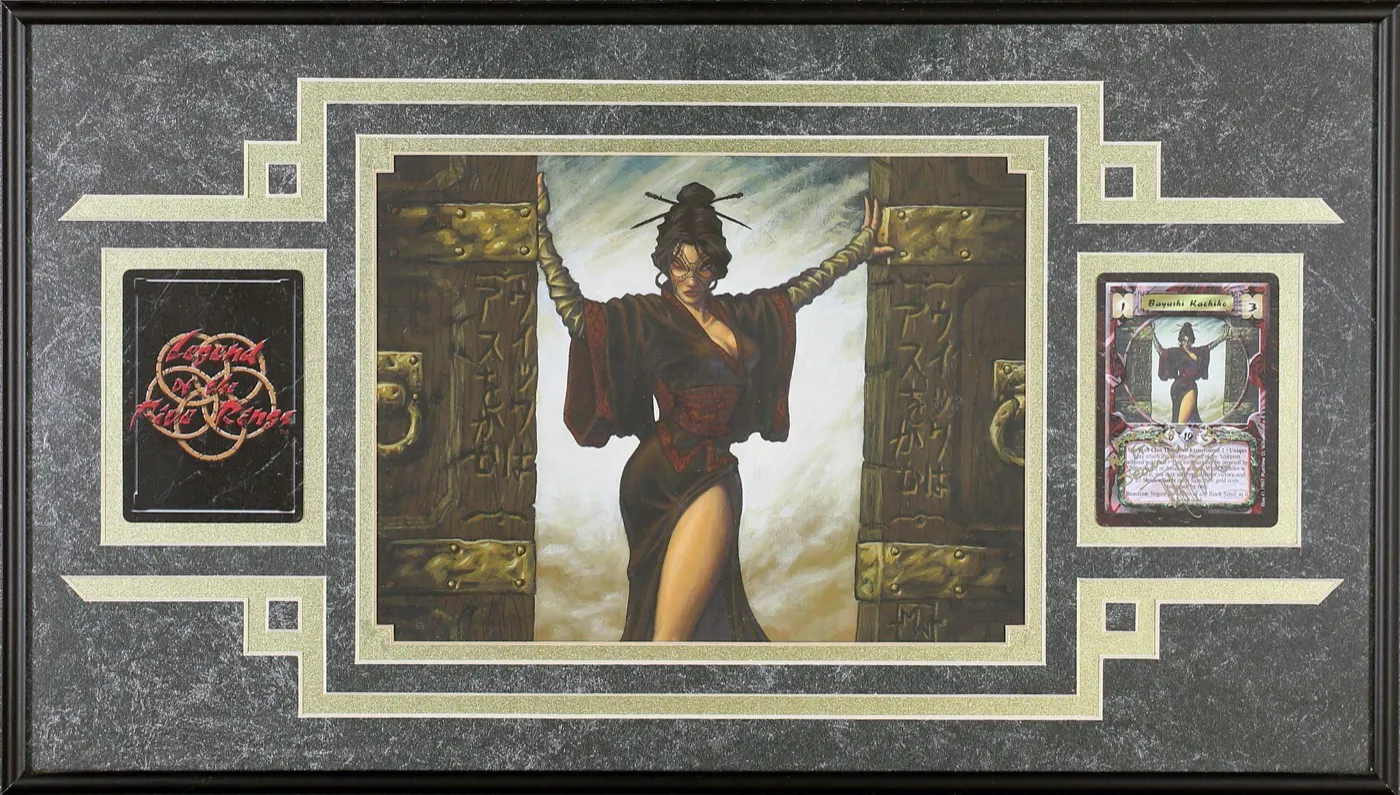
Yeah. Before I worked at Wizards of the Coast the first time, I worked at another company called AEG, the Alderac Entertainment Group. I was the art director and, ostensibly, the world builder for Legend of the Five Rings, a Japanese fantasy card game. I got to know a lot of the artists who worked on that game, and most of them had also been working on Magic for a few years. At that time, Magic: The Gathering was probably three or four years old. It was still pretty early in the trading card game days, and there was a huge gold rush around card games in general because of the success of Magic.
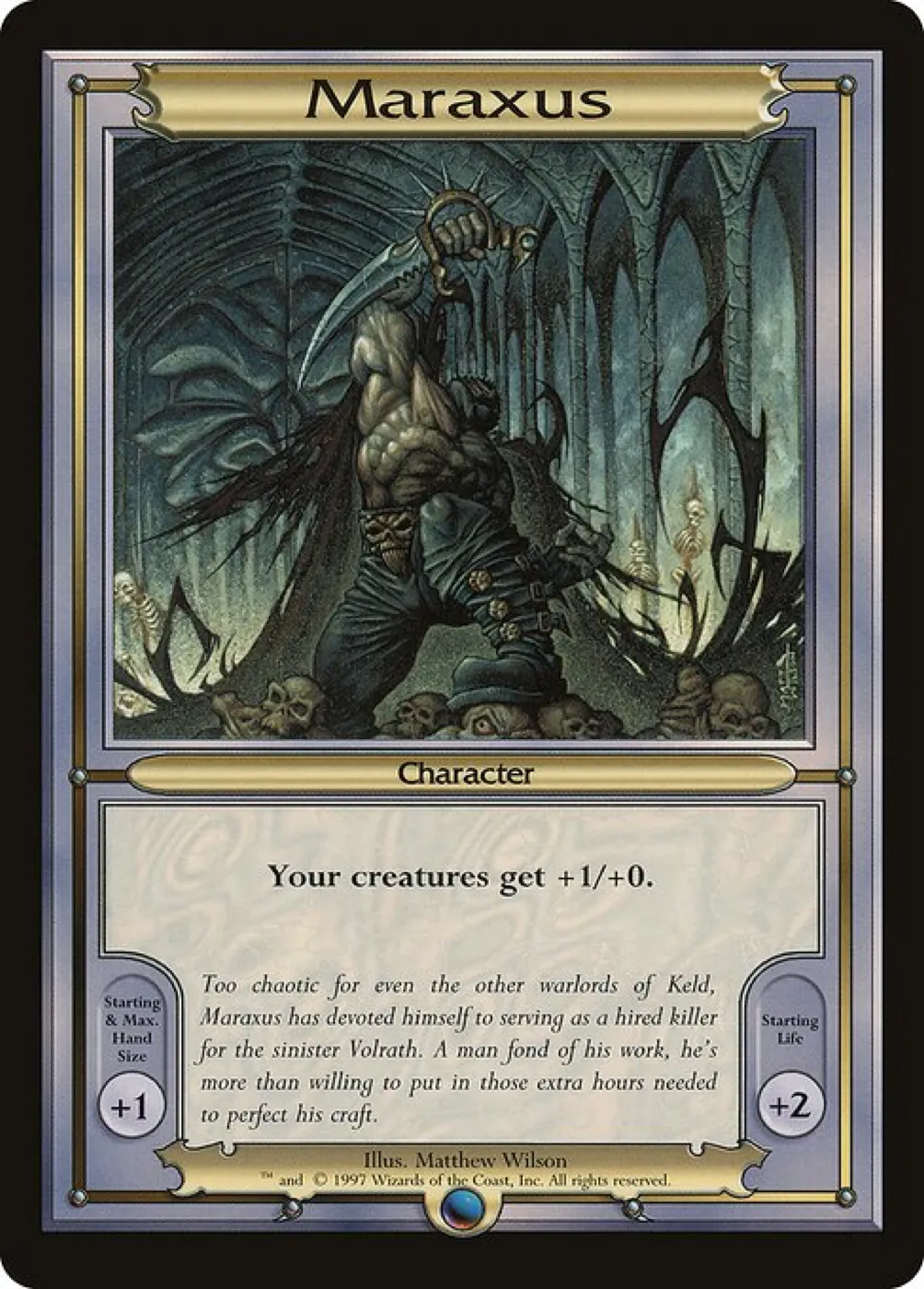
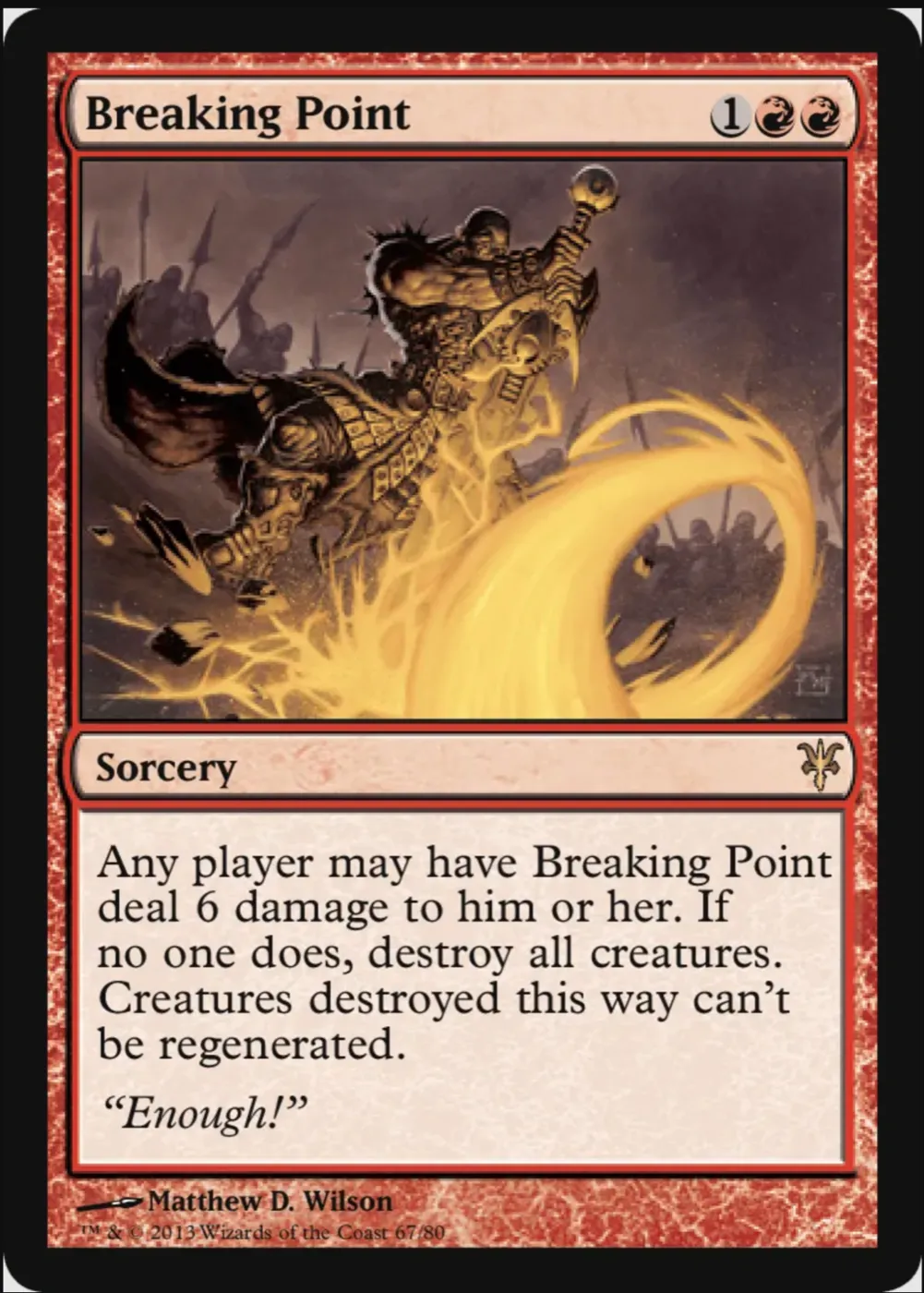
A couple of years after I started at AEG, I got a call from somebody at Wizards of the Coast who said they needed an art director for Magic and asked if I was interested. It was an interesting thing, because I was able to go from one desk to the other and work with a lot of the same people I’d already gotten to know on Legend of the Five Rings. While I was there, I art directed three or four sets; it went very quickly. At any one time, I was working with 70 or 80 artists, because we had to turn the illustrations around very quickly.
We were doing three sets a year. Each year there was a new setting for Magic. It was all in the same universe, but they’d focus on a new aspect of it, so we’d do all-new concept artwork for the creatures, characters, and environments. Each year started with a 300-card set, so that was 300 illustrations, plus any new marketing and packaging illustrations. Then there were two follow-up sets of maybe 100 or 150 cards each.
Frank Beddor
So you needed an army of artists to pull this off.
Matt Wilson
And that was before digital art, too. It was a pretty wild and awesome time, because all the illustrations had to be sent in. Every day I would get multiple FedEx packages and unwrap artwork from the greatest fantasy and sci-fi artists you’ve ever known. My office was an art gallery. I would put everything on display and email all the departments that had a stake in the artwork, and everybody would come through my office pretty much daily to review it and sign off, or let me know if something had wings that wasn’t supposed to have wings.
After that, I would take the artwork to the prepress department, where they’d photograph everything and turn it into transparencies that were scanned and color-corrected. It was this whole amazing, crazy, very physical process. The paintings were all different sizes and mediums, and everything had to be handled with care because they were also very valuable. Now everything happens through email.
Frank Beddor
That must have been a great time. The interaction alone, and seeing the art living right in front of you. That was a good gig.
Matt Wilson
It was amazing. I got to know all of these amazing and talented people, many of whom I’m still friends with today.
Frank Beddor
That’s how I feel about you. I started in 2001 with Doug Chiang, and I worked with you, Chris Appelhans, and Stephan Martiniere, and everybody went on to define these big pop culture worlds. It’s an honor to have had people like that participate.
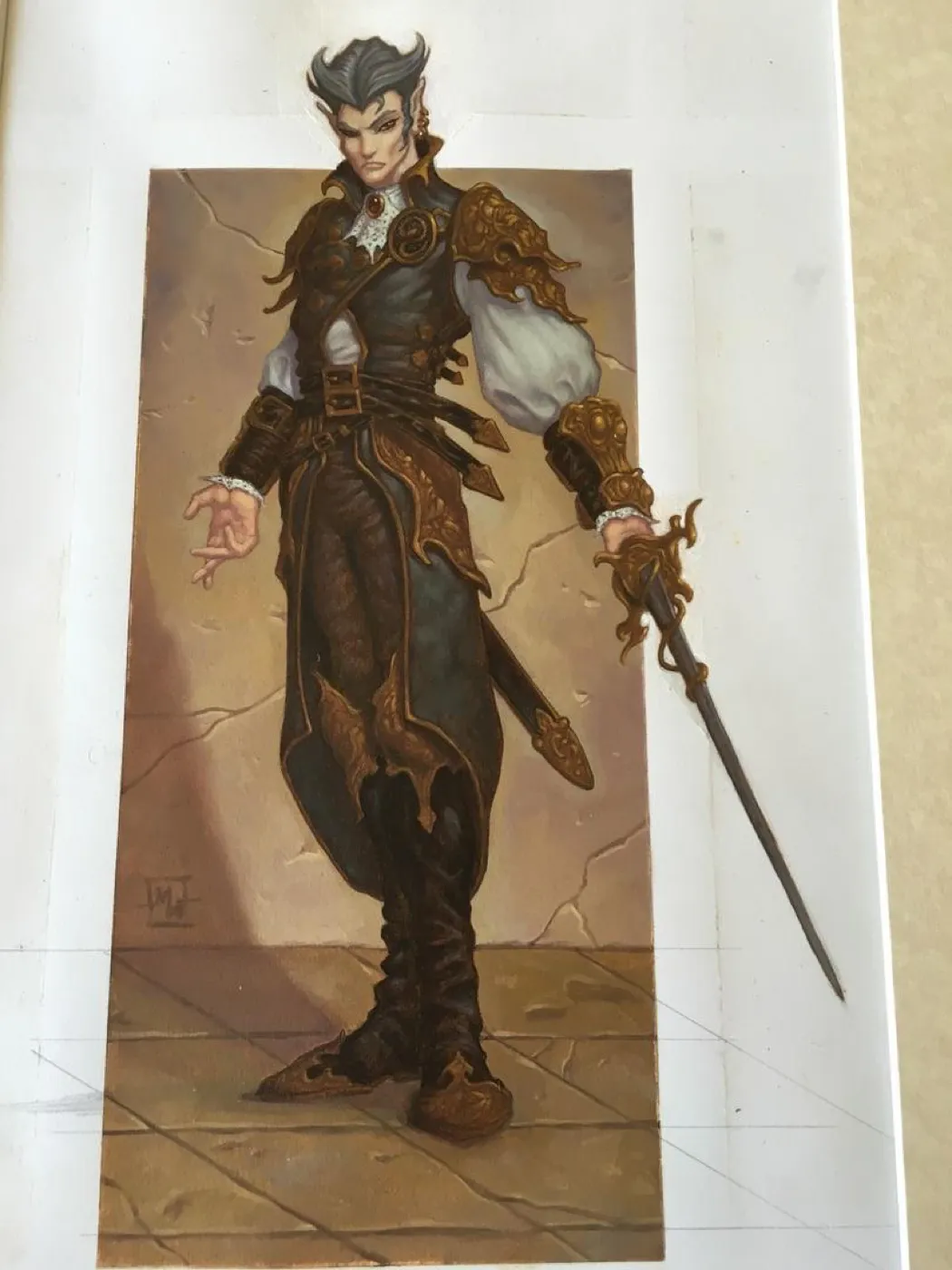
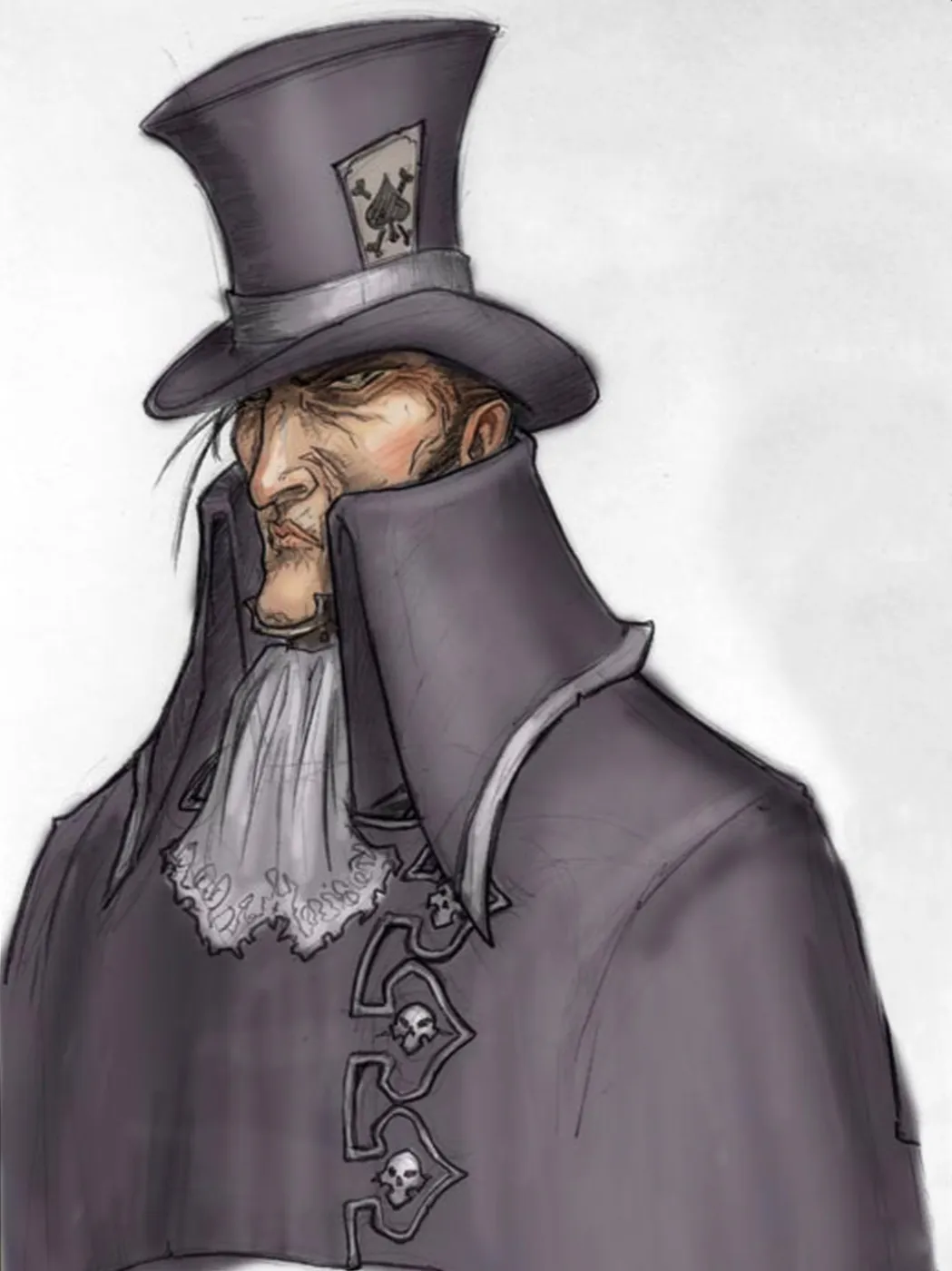
On that note, I wanted to ask you about the inspiration for these concepts. You probably haven’t seen them for a while. One of the things I loved was the blade fan, and also the collar of Hatter Mandrake. His tone was a bit darker, and it fit perfectly with Hatter Madigan’s brother. I don’t think we ever talked about this. I know I sent you material from Ben Templesmith. Can you go back to…when was that, 2003 or 2004?
Matt Wilson
I can remember exactly where I was sitting when I drew those.
Frank Beddor
Oh, tell me.
Matt Wilson
It was just my house in Bellevue, Washington, in the basement, where I had my little art studio. Those things are pretty vivid. There was a good overlap between what you seemed interested in expressing visually about your book and the characters, and what I was into at the time. We were on the tip of the spear when it came to the steampunk movement. Even though I’ve always been adamant that Warmachine wasn’t steampunk. We always called it steam-powered fantasy because it didn’t have as much of the Victorian influence that defines steampunk. But there was enough overlap that it was really natural for me. I could get into your world so easily.
When I do work for somebody else, I really try to drill into what they want and what inspired them about the creation of their world, and do something that will fit. I know we had some conversations about it, so that would have informed any choices I made on the concept board. As for the Asian influence you mentioned, I would think that came from something we talked about. Maybe it was also a way to do something different within that steampunk sphere that isn’t exactly what we’ve seen before.
Frank Beddor
I think that’s right. I think what you were playing around with was how the hats could be weapons. If you look at this hat right here, it naturally feels like you would take it off and it would transform into blades. You were giving me a lot of variety, which I thought was really, really cool. And it just turned out that there’s now a storyline where Hatter’s brother is in Asia. It’s almost as if you created it and I caught up to it.
Matt Wilson
Sometimes that’s how it works.
Frank Beddor
Let me also show you the Alice. I remember this image very specifically and going, “No, she’s too much of a vixen.” Then this one was more the fantasy version. You combined the scepter with a sword, and this little glow here was the crystal, which in The Looking Glass Wars is the power source. But the top one felt the most dynamic, with the cape, the boots, and the wind. I always loved that combination of fantasy and Victorian, with the buckles. I’ve used it on a number of occasions when I’ve wanted to show people what the warrior Alice looks like.
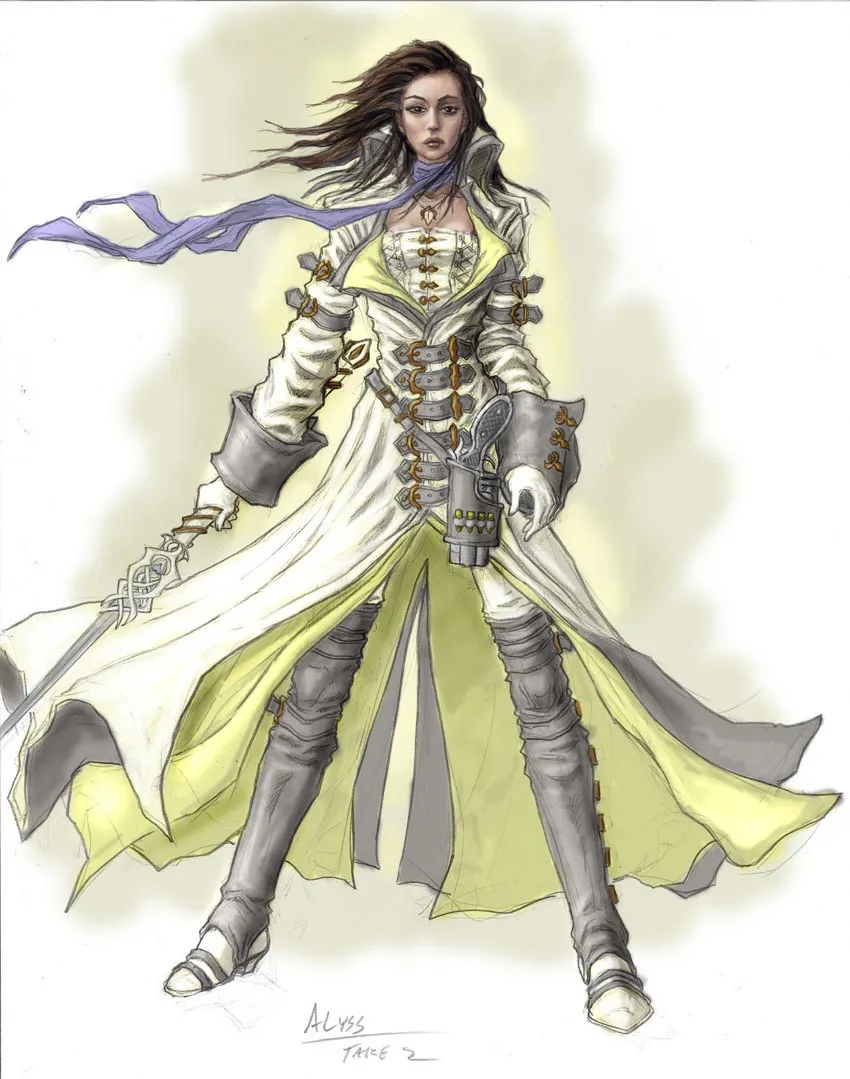
So thank you for being one of the visionaries of Wonderland and playing in my sandbox.
Matt Wilson
It was my pleasure. I don’t really feel worthy of the company I’m keeping there, because you have some incredible artists who have worked on it.
Frank Beddor
You’re being very modest.
Matt Wilson
It was an honor to be part of it.
Frank Beddor
Well, thank you. I really appreciate it. I also appreciate you sharing your process and what’s happening with your company, and I wish you a lot of success. It’s been a pleasure talking with you today.
Matt Wilson
Likewise. Thank you, Frank.
This interview was edited for length and clarity.
For the latest updates & news about All Things Alice, please read our blog and subscribe to our podcast!